



Beef jerky in the drying cabinet: guide + recipe

Beef jerky is made from lean beef, marinated in thin strips and dried evenly at 60–70 °C – in the drying cabinet, this is a predictable process taking about a day, including marinating time. The three success factors: consistently lean meat (fat goes rancid instead of preserving), 3–5 mm strips cut across the grain, and the bend test as the endpoint – the strip cracks but doesn't break.
Last updated: 23 July 2026 · Author: Michael Vering, Beelonia GmbH · All prices: as of July 2026
Reading tip: Jerky's South African brother is cut thicker and cured in vinegar – you can find the comparison in the recipe Making your own biltong.
The recipe: ingredients and marinade
For approx. 400 g jerky: 1 kg lean topside, 100 ml soy sauce, 2 tbsp Worcestershire sauce, 1 tbsp brown sugar, 1 tsp each of smoked paprika, pepper and garlic powder – optional chilli. The soy sauce brings salt and umami, the sugar rounds it off, and the smoked paprika delivers the smoky note right in the marinade. If you want real smoke, give the finished jerky a short cold smoke session – more on that below.
Step by step to jerky
- Cutting: Partially freeze the meat for 1–2 hours, then cut across the grain into 3–5 mm thin strips. Cutting across the grain gives a tender bite; with the grain makes it chewy. Trim off all fat and sinew completely.
- Marinating: Cover and chill the strips in the marinade for 12–24 hours, turning occasionally.
- Placing: Let drain, pat dry, and place on the wire racks with some space between them – nothing should overlap.
- Drying: At 60–70 °C in the drying cabinet; first check after 3 hours, 4–8 hours in total depending on thickness.
- Bend test & packaging: The finished strip cracks when bent, but doesn't break. Let it cool down, then pack airtight or vacuum-sealed.
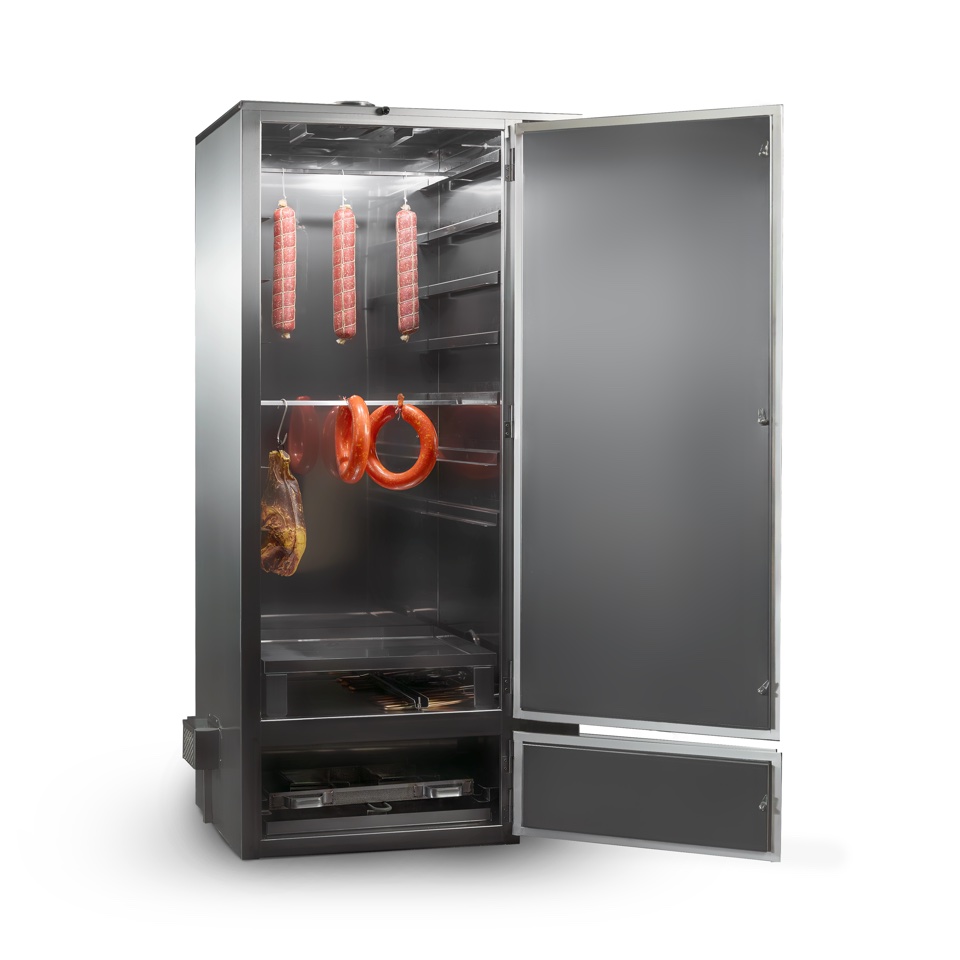
Why the drying cabinet is superior to the oven: Jerky needs a constant temperature and, above all, air exchange – the moisture has to get out. The oven with a wooden spoon in the door is a makeshift solution; the Beelonia TF drying cabinet is built for this: 15 tiers in the TF2 (from 6.135,64 €) up to 25 tiers in the TF6-100, from TF4 upwards with program control for temperature and time profiles. If you regularly produce jerky, dried fruit or commercial dried goods, you are working in completely different quantities here.
The smoke option: Traditional jerky is dried, not smoked – the smoky note comes from the marinade or smoked paprika. If you want real smoke, hang the finished strips in cold smoke (cold smoke generator) for 1–2 hours – dose sparingly, as thin strips absorb flavour quickly.
Safety and shelf life of jerky
Jerky is preserved by removing water – residual moisture is the enemy: properly dried and packed airtight, it lasts for weeks at room temperature, and even longer when vacuum-sealed. Two rules from drying practice: firstly, only use perfectly fresh, lean meat. Secondly, when in doubt, it is better to dry it a bit more and store it cool – a flexible strip that is still moist inside will go mouldy in the container. Salt and marinade support the shelf life, but do not replace thorough drying.
Frequently asked questions about beef jerky
How much jerky does one kilogram of meat yield?
About 350–450 g – during drying, the meat loses around 60 % of its weight in water. That is why the drying cabinet is worth it: if you want jerky more often, it makes sense to produce in 3–5 kg batches.
Can you also make jerky from game or poultry?
Game is excellent (lean!); caution is advised with poultry – it should be heated through before drying. Beef remains the classic; venison and roe deer jerky are popular with hunters.
Why is my jerky as tough as leather?
Usually cut with the grain instead of across it – or too thick. Across the grain, 3–5 mm, and partially freezing it before cutting makes even strips possible in the first place.
Reading tip: The drying cabinet can do more than meat – you can find ideas in Dehydrating in the drying cabinet; the basics of shelf life are in the Shelf life table.
Jerky in batches instead of by the tray
The TF drying cabinets from Beelonia GmbH dry on up to 25 tiers – with program control for reproducible batches. From Beelen since 1880.
Sources and technical basis: Dehydrating and drying practice (cut across the grain 3–5 mm, 60–70 °C, bend test, weight loss ~60 %); Beelonia product data for TF drying cabinets (15–25 tiers, program control from TF4), as of July 2026. Hero photo: Severein via Wikimedia Commons, CC0.


