



Cold smoking salmon: The smoked salmon weekend project

Cold smoking salmon means curing instead of cooking. A side of salmon is cured for 24–48 hours with salt and sugar (2:1), dried for 4–12 hours to form a pellicle, and then cold smoked in 2–3 smoking sessions of 8–12 hours each at 15–20 °C – never above 25 °C. Planned as a weekend project: cure on Friday evening, dry and first smoking session on Saturday, second session on Sunday, enjoy from Monday. The fish remains raw – which is why a freezing step, cold chain, and clean temperature control are absolutely essential.
Last updated: 23 July 2026 · Author: Michael Vering, Beelonia GmbH · All prices: as of July 2026
Reading tip: The differences between cold, warm, and hot smoking – and why cold smoke is the supreme discipline – are explained in the process guide.
What is the difference between smoked salmon, hot-smoked salmon, and gravlax?
All three start with cured salmon – the difference is smoke and heat: gravlax is only cured (raw), smoked salmon is cured and cold smoked (raw), hot-smoked salmon is hot smoked and therefore cooked. If you want silky, translucent slices like from the deli counter, you need cold smoke. If you prefer it cooked, you will find the basic recipe for hot-smoked salmon – the general hot smoking basics are in the trout guide.
The weekend schedule at a glance
| Time | Step | Duration |
|---|---|---|
| In advance | Freeze salmon for 24 h at −20 °C (parasite rule), thaw in the fridge | 1–2 days before |
| Friday, evening | Remove pin bones, cure (salt:sugar 2:1), refrigerate | 15 min + 24–48 h curing time |
| Saturday, midday | Rinse, pat dry, form pellicle (cool & airy) | 4–12 h |
| Saturday, evening | 1st smoking session at 15–20 °C | 8–12 h |
| Sunday | Rest period, then 2nd (possibly 3rd) smoking session | 8–12 h each |
| Monday | 12–36 h maturation in the fridge, then slice | from 12 h |
How do I cure the salmon correctly?
The practical standard is dry curing in a 2:1 ratio – for example, 60 g of salt plus 30 g of sugar per kilogram of fillet – for 24–48 hours depending on thickness. The fillet is placed skin-side down on a rack so that any escaping brine can drain off, and is covered and refrigerated. Thin sides (under 2 cm) are fully cured after 12–16 hours, thick back pieces over 3 cm need 24–36 hours.
If you want to work to the exact gram, use the equilibrium method: weigh exactly 2.0–2.5 % salt of the fillet weight – this means the fish cannot be over-salted, regardless of the time. After curing, rinse cold or soak briefly (15–30 minutes, Anglo-Saxon school) and pat thoroughly dry. Professional reference from the fish smoking book environment of Michael Wickert: "First a whole day in salt, then three days at 15 to 22 degrees in cold smoke."
Pellicle: Why shouldn't the salmon go into the smoke wet?
Before smoking, the pellicle must form on the fillet – a thin, leathery-sticky protein skin that binds the smoke cleanly. To achieve this, the side dries uncovered, cool (4–8 °C), and airy for 4–12 hours. A wet surface takes on smoke as a wet-sour off-flavour; a leathery surface that feels "like sandpaper" and is slightly sticky is ready.
Cold smoking with a smoking maze or smoke generator?
Both produce cool smouldering smoke – the smoking maze is the affordable, maintenance-free solution in the smoker, the smoke generator is the convenient external one: double-wall insulated, with separated ash and even smoke over many hours. The Beelonia design solves two typical problems of single-wall generators: condensation does not cause the smoking dust to clump (rock wool insulation), and the ash remains outside the cooking chamber – this prevents bitter substances. It is connected via a flexible pipe to the smoker, kettle grill, or smoking cabinet; a 230 V supply drives the fan.
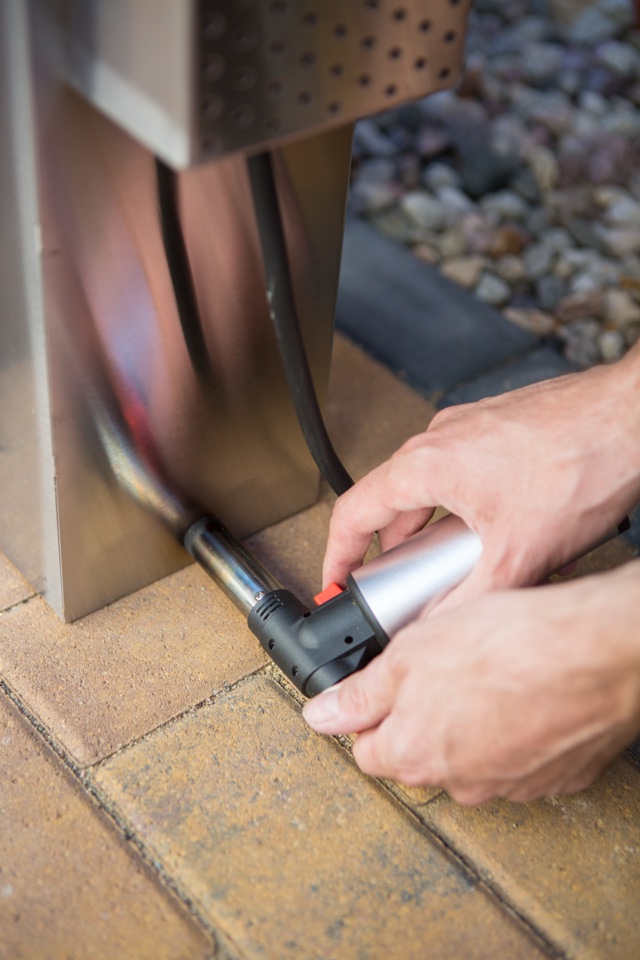
Important when filling: use coarser smoking dust (e.g. RÄUCHERGOLD grain size 750–1000 upwards). Fine dust compacts and suffocates the embers; coarser chips form small air cushions so that the generator smoulders cleanly from top to bottom. Fill the container to about three-quarters and ignite an ember nest at the bottom in the designated hole with a storm lighter or blowtorch – after a few minutes, there is an even, cool smoke.
For beginners with an F-smoker, the cold smoke insert (€74.97) is the easiest way; those who regularly cold smoke large quantities opt for the smoke generator (€497.42). Both fit the Smoky and F series.
The temperature limit: What happens above 25 °C?
Above about 25 °C, the muscle protein begins to coagulate: white protein drops appear on the fillet, the texture becomes crumbly and cooked – smoked salmon unintentionally turns into hot-smoked salmon. Ideal is 15–20 °C in the chamber. That is why cold smoking in Germany is an autumn and winter affair: if the outside temperature rises above 25–30 °C, even the best smoker won't help anymore – one reason why smoked salmon traditionally becomes a Christmas project. A double-wall smoker additionally buffers outside fluctuations and prevents condensation on the inner walls.
Safety: Freezing requirement, listeria, cold chain
Cold-smoked salmon remains raw – therefore three strict rules apply: freeze thoroughly at −20 °C for 24 hours beforehand (parasites, EU Reg 853/2004), cool continuously at 0–4 °C, and protect risk groups. Listeria multiply even at fridge temperatures and are odourless; in official monitoring over the years, about every sixth sample of cold-smoked or cured fish was contaminated. Pregnant women, the elderly, and immunocompromised people should avoid raw smoked salmon. Vacuum-packed at 0–2 °C, the uncut side keeps for 2–3 weeks, once cut 2–3 days.
Frequently asked questions about cold smoking salmon
Can I also cold smoke salmon in summer?
Practically no: as soon as the chamber and outside air are above 25 °C, the fish starts to cook. Alternative solutions are night hours during cool periods – or the project moves to autumn. That is why experienced smokers plan smoked salmon as a winter project.
How many smoking sessions does smoked salmon need?
2–3 sessions of 8–12 hours with rest periods in between are the hobby standard; professionals like Michael Wickert smoke for up to three days. More sessions mean more smoke depth – between sessions, the resting phase harmonises the aroma.
Which wood goes well with smoked salmon?
Beech is the safe standard, alder the classic Nordic choice for salmon. Both are low in resin and mild enough for long smoking times – details and aroma profiles in the smoking dust guide.
Reading tip: Want to dive deeper? "Das Fischräucherbuch" by Michael Wickert (288 pages, €36.30) dedicates its own chapters to cold smoking – available here. And the exact temperature corridors of all methods can be found in the smoking temperature table.
Your cold smoke setup is waiting
Double-wall smokers, cold smoke insert, and smoke generator – manufactured in Beelen, designed for long, cool smoking sessions. Since 1880.
Sources and technical basis: Curing schools and process values (2:1 dry cure, EQ 2–2.5 %, pellicle 4–12 h, 15–20 °C, maturation 12–36 h) from cold smoking literature; safety information according to BfR (listeria in smoked fish), EU Reg 853/2004 (freezing requirement −20 °C/24 h), and FDA/Oregon State; Wickert process according to publicly documented interviews; smoke generator technology: Beelonia product video. Prices: beelonia-shop.de, as of July 2026.


