



HACCP in smoking: Duties & documentation for businesses

HACCP means: analysing hazards, determining critical control points, defining limits, measuring, documenting, and taking corrective action – for smoking, this boils down to two points: core temperature during cooking and an unbroken cold chain before and after. The foundation is the EU Regulations 852/2004 (hygiene and self-monitoring) and 853/2004 (approval of animal-derived food) plus traceability according to 178/2002. The good news for small businesses: proportionate documentation is enough – and modern controls do half the work for you.
Last updated: 23 July 2026 · Author: Michael Vering, Beelonia GmbH · All prices: as of July 2026. Not a substitute for legal advice – your local veterinary office is responsible.
Reading tip: How HACCP flows into the overall planning of the facility is shown in the butchery facility planning.
The critical points of smoking
| Process step | Hazard | Control / Limit | Proof |
|---|---|---|---|
| Goods receipt | Bacterial load, broken cold chain | Temperature upon receipt, freshness | Receipt log |
| Salting/Curing | Too little salt (botulism hurdle) | Adhere to recipe (e.g. ≥ 20 g curing salt/kg cold smoke meat) | Recipe documentation |
| Hot smoking/Cooking | Survival of pathogens | Core temperature (fish ~60–65 °C, poultry ≥ 72 °C) | Measurement per batch |
| Cooling/Storage | Listeria growth | Rapidly to 0–4 °C, cold room documentation | Temperature log |
| Cleaning | Soot glaze, biofilms | Deep cleaning 2–3×/year, accessories per batch | Cleaning schedule |
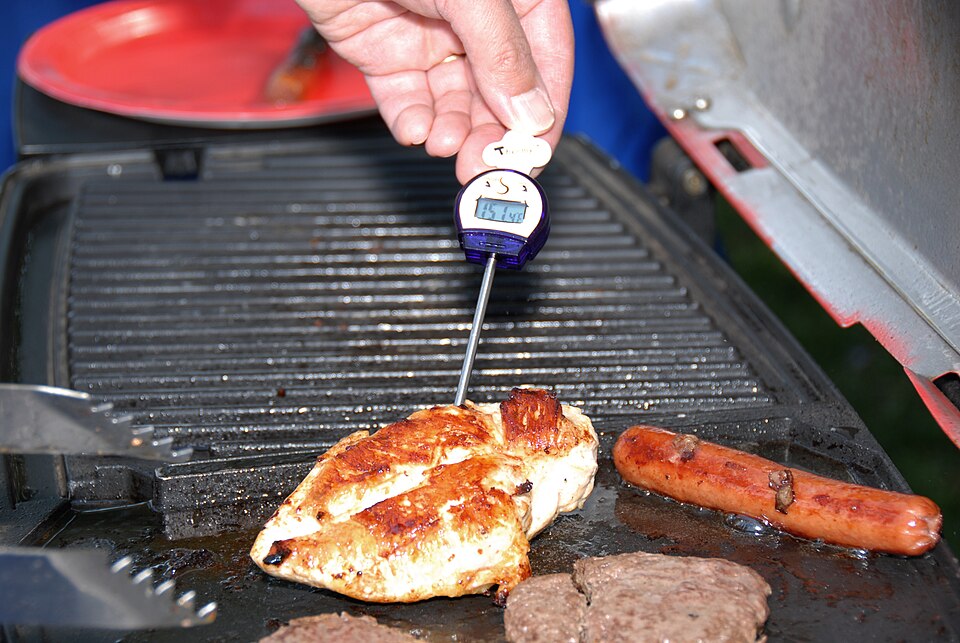
The documentation the veterinary office wants to see: a simple, active system – goods receipt list, recipe and batch logs with core temperatures, cold room records, cleaning schedule with signatures. It's not the volume that counts, but the completeness. An A4 folder with five templates fully supports a small smoking facility; for medium batches and up, technology takes over.
Technology as a documentation helper: The PC program control (1,938.51 €) automatically and identically runs temperature, smoke, and time profiles with a core temperature probe – reproducibility is half the HACCP battle, because a validated process that always runs the same way only needs confirmation instead of individual proofs. Added to this is oven cleaning as a checkpoint: veterinary offices expect 2–3 deep cleans per year for stainless steel ovens – the instructions are ready.
Special case cold smoke: raw goods, stricter logic
With cold smoking, there is no cooking point – safety depends on salt content, temperature control below 25 °C, and the cold chain of the raw goods. For commercial cold smoke fish, hard targets are added (water phase salt content ≥ 3.5% for vacuum-packed goods, freezing requirement against parasites according to EU Reg 853/2004) and the use-by date instead of best before date. If you sell raw and vacuum-packed, you are working in the strictest class of smoking – the basics are in the cold smoke guide and the shelf life table.
Frequently asked questions about HACCP
Do I need to have my business approved?
Registration yes, always – EU approval according to Reg 853/2004 is needed by anyone marketing animal-derived food beyond local direct sales. The veterinary office clarifies the boundaries in individual cases; asking early saves on renovations.
Are my records from my hobby enough?
As a starting point, yes – commercially, these become systematic templates with a signature and date. The leap is standardisation, not quantity: same recipe, same measurement, same filing.
What happens in the event of a deviation, e.g. core temperature too low?
That is the core of HACCP: defined correction – continue cooking, quarantine the batch if in doubt, document the incident. If you define the correction in advance, you can decide calmly instead of frantically in an emergency.
Reading tip: The legal and procedural landscape of commercial smoking – including the liquid smoke shift – is outlined in the facility planning.
Processes that pass inspections
Program control, core probes, and easy-to-clean V2A stainless steel (AISI 304) systems – Beelonia GmbH builds the technology for self-monitoring. Since 1880.
Sources and technical basis: EU Reg 852/2004 (HACCP self-monitoring), 853/2004 (approval), 178/2002 (traceability); commercial dossier (standardisation as the core of the professional leap, veterinary cleaning practice 2–3×/year); cold smoke targets (WPS ≥ 3.5%) from the cold fish dossier. Not legal advice. Prices: as of July 2026.


