



How healthy is smoked food? PAHs, smoke & research

The answer to the health question: smoked food is a luxury food whose critical point is polycyclic aromatic hydrocarbons (PAHs) – above all benzo(a)pyrene. Their formation only begins noticeably above a combustion temperature of around 350–400 °C and explodes when fat drips into the embers. If you smoulder cleanly instead of blazing, keep fat away from the embers and guide smoke with distance, you drastically reduce the exposure – this is exactly what classic smoking craftsmanship is all about.
Last updated: 23 July 2026 · Author: Michael Vering, Beelonia GmbH. Classification, no medical advice.
Reading tip: The smoke chemistry behind it – phenols, creosote, blue smoke – is explained in Blue smoke, white smoke.
What does the research say?
Three proven core statements: 1. PAHs are formed during incomplete combustion – their relevant formation begins above ~350–400 °C. 2. A large part of the benzo(a)pyrene in the smoked goods comes from fat dripping into the embers – series of measurements show a multiple of exposure with fatty goods over open embers. 3. Spatial separation of smoke generation and goods allows soot and tar particles to separate on the way. For commercial goods, the EU regulates maximum levels; modern smouldering smoke systems fall well below them. In short: smoking itself is not the problem, but bad smoking.
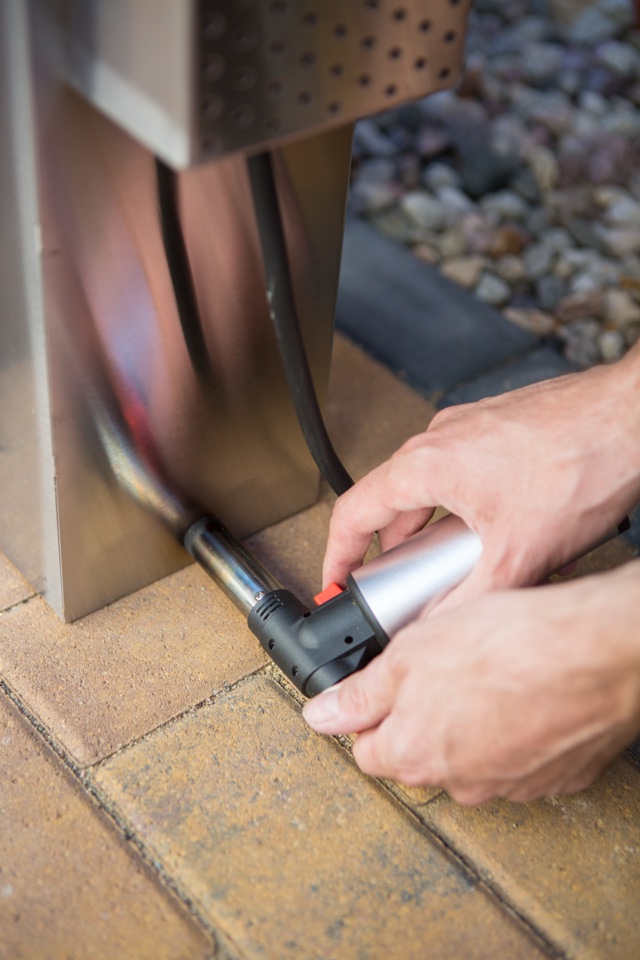
The three cardinal rules in practice: First, controlled smouldering – guide the air supply so that the smoking dust smoulders instead of burning; thin blue smoke is the sign. Second, the fat tray: in every Beelonia smoker, it sits above the embers; equipped with aluminium foil or bird sand, it catches any dripping fat. Third, distance: the external smoke generator and tall smoking cabinets build in exactly the distance over which particles separate.
And the enjoyment context: In terms of nutritional medicine, the same applies to smoked food as to grilled and cured food – moderation instead of avoidance. If you smoke yourself, you have an advantage that no industrial product offers: full control over wood, temperature and smoke guidance.
Frequently asked questions about the health issue
Is the black crust a cause for concern?
Cut off burnt, sooty-bitter spots – they indicate combustion that is too hot. The golden-brown smoke colour itself is carbonyl chemistry, not soot.
Are bought smoke flavourings the healthier alternative?
Complicated: purified liquid smoke is low in PAHs, but lost its EU approval extension in 2023/24 due to other questionable components. Classic, cleanly guided wood smoke remains the craft standard – the background can be found in System planning.
How often can you eat smoked food?
There is no blanket number – the general dietary recommendation is variety and moderation. Cleanly smoking it yourself starts with the best baseline.
Reading tip: The second health topic of smoking – listeria and raw consumption with cold smoke – is covered in the Smoked salmon guide.
Clean smoking is healthier smoking
Fat trays, drip pans, generators and quality smoking dust – the technology for low-pollutant smoke. From Beelonia GmbH, since 1880.
Sources and technical basis: Smoke chemistry dossier (B(a)P formation from ~350–400 °C, fat-ember measurements, three PAH cardinal rules, EU maximum levels, EFSA liquid smoke reassessment 2023). No medical advice.


