



Smoking ham: Raw ham from curing to maturing

Smoking ham follows a strict sequence: dry cure with 35–40 g of nitrite curing salt per kg (1 day per cm of thickness + 2–3 days), let it burn through for about half the curing time, dry for 1–3 days, then apply 3–6 cold smoke sessions of 8–12 hours each at 15–25 °C – and finally mature for 4–8 weeks until the scales show a 30–35% weight loss. If you stick to this order and stay below 25 °C, you will get firm, aromatic raw ham just like from a country butcher.
Last updated: 23 July 2026 · Author: Michael Vering, Beelonia GmbH · All prices: as of July 2026
Reading tip: Why cold smoking preserves instead of cooks – and where the 25 °C limit comes from – is explained in the process guide. Ham is its supreme discipline.
The principle: Why does raw ham keep?
Raw ham is preserved via three hurdles: salt (lowers water activity), drying (removes water) and smoke (aroma, colour and superficial protection against germs). The nitrite in the curing salt takes on three additional jobs: it inhibits Clostridium botulinum, ensures a stable red colour and provides the typical curing aroma. The rule of thumb in the trade: salt preserves, drying stabilises – the smoke is the finishing touch. And: below 25 °C it is preserved, above that it is cooked.
The five phases at a glance
| Phase | Duration (rule of thumb) | Climate | What happens |
|---|---|---|---|
| 1 · Curing | 1 day/cm + 2–3 days (vacuum) | 2–7 °C | Salt penetrates, reddening starts |
| 2 · Burning through | ≈ ½ of curing time | under 7 °C, 70–80% RH | Salt distributes evenly to the core |
| 3 · Drying | 1–3 days | cool (< 16 °C), airy | Surface becomes absolutely dry |
| 4 · Cold smoking | 3–6 sessions of 8–12 h + rests | 15–25 °C | Aroma, colour, surface protection |
| 5 · Maturing | 4–8 weeks | 12–15 °C, 70–75% RH | Water loss up to 30–35%, aroma rounds off |
Phase 1 & 2: Curing and burning through
The practical standard: 35–40 g of nitrite curing salt plus 2–4 g of sugar per kilogram of meat, along with pepper, juniper, coriander, bay leaf or garlic. The mixture is thoroughly massaged into the meat; it is cured in a vacuum bag or covered container at 2–7 °C. Without a vacuum, turn every 2–3 days. Several rules of thumb compete for the duration – what has proven successful in a vacuum is: 1 day per centimetre of meat thickness plus 2–3 days for safety, always measured at the thickest point. The lower limit for a safe salt cure is ~30 g/kg; you must never work with less than 20 g/kg when cold smoking.
After curing, the meat is washed off, patted dry – and then comes the most frequently skipped step: burning through. The ham rests below 7 °C so that the penetrated salt is distributed evenly from the edge to the core. Rule of thumb: about half the curing time. If you burn through for too short a time, you risk a salty edge and a bland core.
Phase 3 & 4: Drying and cold smoking
Before the first smoke session, the surface must be absolutely dry – hanging in a cool and airy place for 1–3 days. A damp surface takes on a sour-bitter smoke flavour and becomes patchy. Then the cold smoking begins: smoke sessions of 8–12 hours at 15–25 °C (ideally 15–20 °C), generated over beech smoking dust in a cold smoke generator, cold smoke insert or smoke generator. Between sessions, the ham rests for 12–24 hours with fresh air – during these breaks, the aroma harmonises.
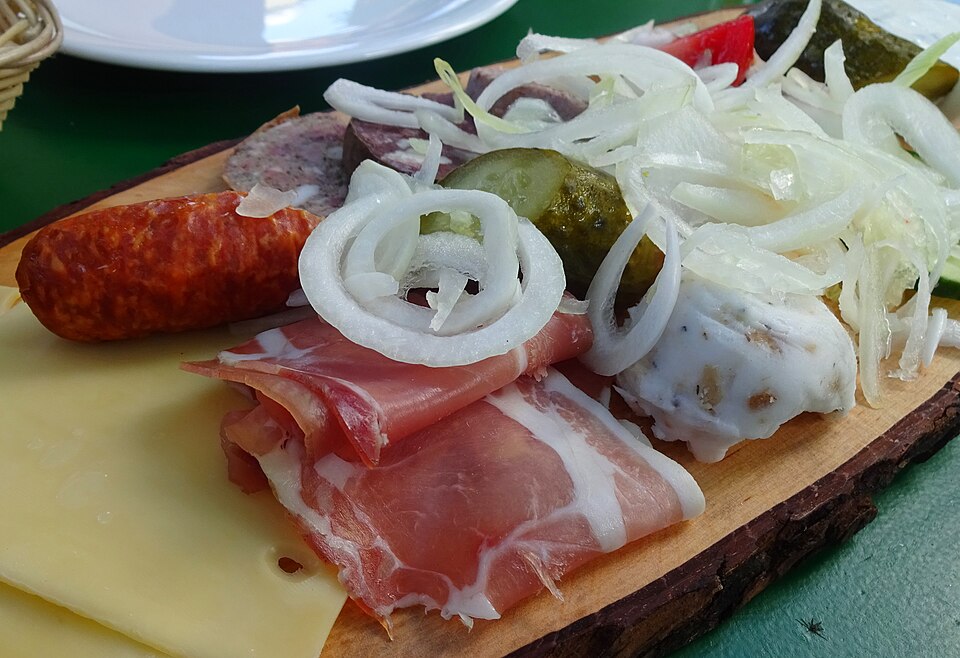
The number of sessions controls the intensity: 2–3 sessions result in mild breakfast ham, 5–6 sessions give the strong, dark profile of classic farmer's ham. A proven practical scheme for pork shoulder: three times 8 hours of smoke with 24 hours of rest each.
Regarding the season: cold smoking works reliably from October to March, when the outside temperature safely stays below 20–25 °C. The ham that is supposed to be on the board at Christmas therefore starts curing in October – raw ham is autumn planning, not a spontaneous idea.
Phase 5: Maturing – the scales are the truth
After the last smoke session, the ham matures hanging at 12–15 °C and 70–75% humidity, draught-free but with air movement – it is not finished according to the calendar, but at 30–35% weight loss. That is why the starting weight must be noted: a 2,000 g ham reaches its goal at around 1,350 g. From ~45% loss, it is considered shelf-stable. A realistic timeframe is 4–8 weeks; thinner pieces like salmon ham (boned pork loin) or nut ham are faster and often only need 2–4 smoke sessions.
Practice in the Beelonia smoker: From hobby to production
For a hobby, a tall, double-walled smoking cabinet from size F2 is sufficient: the ham hangs freely on the meat hook, the cold smoke insert (€74.97) or smoke generator (€497.42) provides cool smoke, and the double wall keeps the chamber stable even when the weather changes. Condensation – the enemy of any cold smoking – stays outside.
The Reschauer family in the Bavarian Forest shows what the same principle looks like in production size: in their F6-100 with an external smoke generator, around 160 kg of salmon ham with rind and pork belly hang for six days in cold smoke – sold in their own shop, with customers coming from as far as Austria.
Bacon, salmon ham & co.: The variants
Pork belly is raw ham in fast forward: same process, but the 4–5 cm thin belly only cures for ~7–8 days – and can take significantly more smoke with 5–10 smoke sessions. Salmon ham (boned pork loin) and nut ham also follow the scheme, just shorter. The regional classics show the range: Black Forest ham is smoked over fir branches at ~25 °C, Holstein Katenschinken over beech, South Tyrolean speck gets little salt and at least 35% weight loss. For your own project: beech is the reliable standard – alternatives and aroma profiles in the smoking dust guide.
Frequently asked questions about smoking ham
Can I smoke ham without nitrite curing salt?
Ham cured with pure sea salt (Parma principle) is possible, but more demanding: without nitrite, there is no reddening, curing aroma or botulism inhibition. For beginners, nitrite curing salt at 35–40 g/kg is the safe standard – only experienced people work at the lower end (30 g/kg).
My ham has a dry, dark edge – what went wrong?
A dry edge is caused by drying too quickly: maturing air that is too warm, too dry or draughty. Remedy: raise humidity to 70–75%, avoid draughts – a slight dry edge will even out again when resting in a vacuum for a few days.
White coating when maturing – mould or salt?
A dry, powdery white coating is usually crystallised salt or desirable noble mould; a furry green, black or red coating is harmful mould. Wipe off salt efflorescence, cut away harmful mould generously and correct the maturing climate – if in doubt, dispose of it.
Reading tip: The exact temperature and core temperature corridors for all meat products – including Kassler and cooked ham – can be found in the smoking temperature table; if you want to start commercially, read the system planning for butchers.
Your ham project starts in autumn
Double-walled smokers with hanging height, cold smoke technology and original meat hooks – manufactured since 1880 by Beelonia GmbH in Beelen.
Sources and technical basis: Raw ham reference process and figures (nitrite curing salt 35–40 g/kg, burning through, 15–25 °C, weight loss 30–35%) from butcher trade portals and specialist smoking literature; PGI specifications for Black Forest ham, Holstein Katenschinken, South Tyrolean speck; practical example: Beelonia video Reschauer family (F6-100). Prices: beelonia-shop.de, as of July 2026.


