



Blue smoke, white smoke: controlling smoke quality

Thin, almost invisible blue smoke is the quality goal; thick white or grey smoke is the warning sign. The reason is physics and chemistry: cleanly burned wood produces tiny particles that scatter short-wave blue light and carry aroma phenols – thick smoke, on the other hand, is caused by a lack of oxygen, is rich in tar and deposits bitter creosote. If you control the temperature, air and smoking dust quality, you directly control the taste and pollutant load.
Last updated: 23 July 2026 · Author: Michael Vering, Beelonia GmbH · All prices: as of July 2026
Reading tip: If something has already gone wrong – bitter, pale, rubbery – the error diagnosis helps; which wood burns cleanly is explained in the smoking dust guide.
Why is the smoke blue – or white?
With clean combustion, the smoke particles are smaller than the wavelength of light and preferentially scatter blue light (Rayleigh scattering) – the smoke appears bluish to almost invisible. If the particles grow due to a lack of oxygen or moisture, they scatter all wavelengths: the smoke becomes thick and white. It is exactly this white smoke that carries the unwanted load – soot, tar and creosote, the 'numbing', bitter off-flavour that coats the tongue.
The often-heard phrase 'lots of smoke = lots of flavour' is thus disproved: the flavour-giving methoxyphenols (guaiacol, syringol from the lignin) are created during clean combustion on a wood surface at around 300–400 °C. Thick, cool, oxygen-poor smoke delivers acids and bitter substances instead. Less, but better smoke is the goal.
The three adjusting screws of smoke quality
| Adjusting screw | How it works | Practice |
|---|---|---|
| Smouldering temperature | too cool → thick smoke; too hot (>400 °C) → more PAHs | controlled smouldering, aroma window on the wood surface ~300–400 °C |
| Oxygen | too little → tarry; too much → wood burns, little smoke | dose the supply air until thin blue smoke appears |
| Smoking dust/wood | moist/resinous → white and bitter | dry, low-resin hardwood (beech), never softwood |
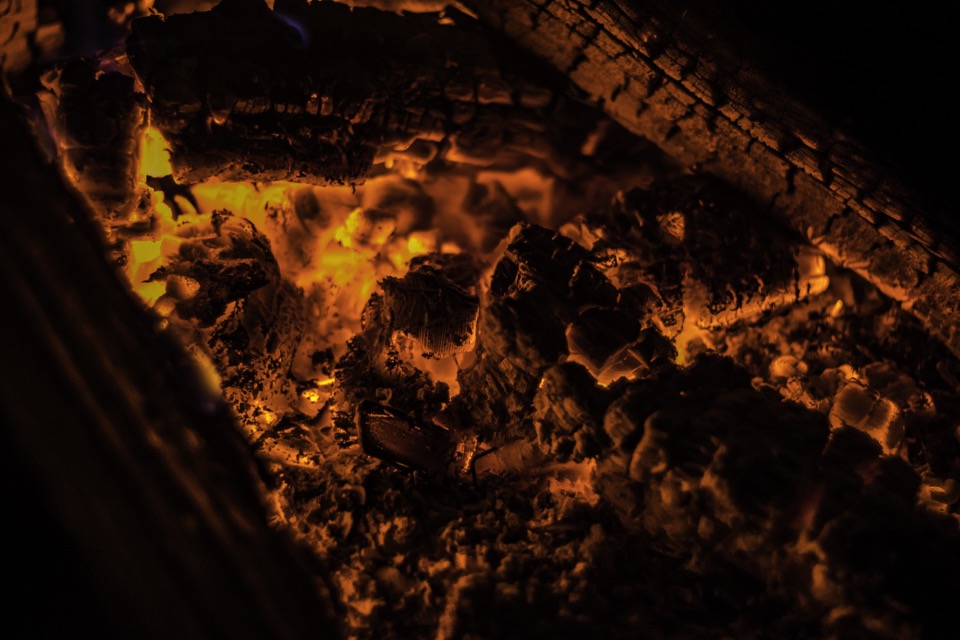
What this looks like on the smoker: Open the supply air just enough so that the smoking dust smoulders but does not burn; keep the exhaust air open so that the smoke draws instead of accumulating. Accumulated smoke is the most common reason for white smoke and creosote – how to adjust the draught correctly is shown in the article Adjusting supply & exhaust air.
The Beelonia factor: The double-walled F-series helps twice – the insulated wall prevents condensation (moist inner walls = more white smoke), and the controlled air flow keeps the smouldering stable. Dry RÄUCHERGOLD beech smoking dust is the second building block: it forms less white smoke than moist DIY store material.
Brief excursion: smoke and health
The cancer-relevant benzo(a)pyrene formation only starts noticeably above around 350–400 °C – if you smoulder low and keep fat away from the embers, you drastically reduce the pollutant load. Three rules: smouldering temperature below 400 °C, never let fat drip onto the embers (use a drip tray), and generate the smoke as separately as possible – exactly the principle of the external smoke generator. The full classification is provided in the article How healthy is smoked food?.
Frequently asked questions about smoke quality
Do I have to soak smoking wood before smoking?
No – that is a myth. Moist wood produces white, acidic smoke instead of clean smoke. In the cold smoke generator and in the smoker, dry smoking dust belongs in the oven; only when grilling over open embers does soaking occasionally have a cooling purpose.
Is some bitterness normal right after smoking?
Slight beech bitterness immediately after the process evaporates after about a day of airing. If it remains massively bitter and 'numbing', it was creosote – then adjust the air, temperature and smoking dust.
Why does my cold smoke generator smoke white?
Usually the smoking dust is too moist or too coarse, or there is a lack of air supply. Press dry, fine smoking dust (grain size 0.5–1.0 mm) down firmly and open the supply air – then the thin smoke will appear. More in the article Filling the cold smoke generator correctly.
Reading tip: The aroma profiles of the woods are detailed in the smoking dust guide; the grain size question in the article Smoking dust grain size.
Clean smoke, better result
Double-walled smokers with controlled air flow and dry RÄUCHERGOLD – the basis for thin blue smoke. From Beelonia GmbH, since 1880.
Sources and technical basis: Smoke chemistry dossier (Rayleigh scattering/blue smoke, aroma phenols from lignin, creosote from incomplete combustion, aroma window ~300–400 °C, benzo(a)pyrene threshold 350–400 °C, three cardinal PAH rules); Beelonia product data, as of July 2026.


