



Nitrite curing salt or sea salt? Safety & taste

The short answer: For hot-smoked fish, pure sea salt or evaporated salt is sufficient – for cold-smoked raw ham, bacon and raw sausage, nitrite curing salt (NPS) is the safety recommendation. The reason is the raw factor: Cooked goods become low in bacteria through heat; goods that remain raw need the botulism inhibition of nitrite. NPS is table salt with 0.4–0.5% sodium nitrite; it inhibits Clostridium botulinum, ensures reddening and provides the curing aroma. When cold smoking meat, the rule is: never use less than 20 g of curing salt per kilogram.
Last updated: 23 July 2026 · Author: Michael Vering, Beelonia GmbH · All prices: As of July 2026
Reading tip: The concrete application of both salts – dry vs. wet curing – is shown in the Curing Guide.
What does which salt do?
| Task | Sea salt / evaporated salt | Nitrite curing salt (NPS) |
|---|---|---|
| Water extraction / aw reduction | yes | yes |
| Botulism inhibition | no | yes (nitrite) |
| Reddening (stable red) | no (remains greyish) | yes |
| Curing aroma | neutral-salty | typically savoury |
| Ideal for | Fish hot, short-term salting | Raw ham, bacon, raw sausage (raw, long maturation) |
The decision rule in two questions
1. Does the product remain raw? 2. Does it mature for a long time at a low temperature? Two yeses mean NPS – here, botulism inhibition is non-negotiable. Two noes (trout, mackerel, hot-smoked salmon strips – all cooked hot and consumed promptly) mean: sea salt is sufficient. The classic trout brine with 6% salt needs no nitrite; the raw ham, which hangs for weeks at 15 °C, on the other hand, very much does.
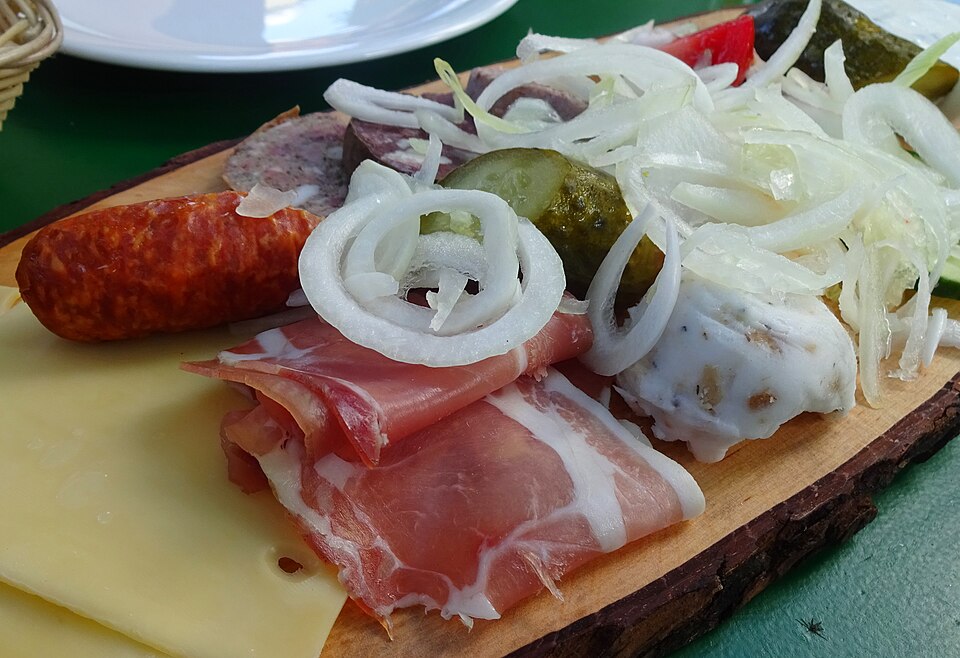
Why reddening is not thanks to the smoke: A persistent myth attributes the pink colour to the smoke. In fact, it comes from the nitrite, which forms the stable, heat-resistant nitrosomyoglobin with the muscle pigment. That is why Kassler stays pink, while the raw chop fries grey. Without NPS, even the best raw ham turns greyish inside – fine in taste, visually unusual.
The honest safety assessment: NPS is an established preservative in the permitted quantities, and the botulism inhibition in raw long-life goods is a real benefit. The critical point is nitrosamines, which can form during strong heating – that is why NPS belongs in goods that remain raw, not in barbecue food for searing. If you consciously work without nitrite (Parma principle with pure sea salt), you must compensate for the missing hurdle with stricter salt, drying and cooling controls – that is advanced territory.
Dosage: The most important guide values
Raw ham/bacon: 35–40 g NPS per kg of meat (lower limit for salt curing ~30 g, absolute cold smoking limit 20 g). Fish brine: 6% sea salt (60 g per litre). No iodised salt for smoking. Add 2–4 g of sugar per kg to the NPS – it softens the saltiness and feeds the reddening and lactic acid bacteria. Ready-made spice mixtures like Rohwusal take care of the dosage and provide the perfect bed of spices right along with it.
Frequently asked questions about salt and nitrite
Can I smoke fish with nitrite curing salt?
For hot-smoked fish, it is unnecessary and untypical in taste – sea salt is the standard here. Nitrite only plays a role in special cold-smoked, long-life fish products; for the classic smoked trout, it does not belong in the brine.
Why no iodised salt for smoking?
Iodised salt can promote off-flavours and discolouration during long curing and smoking processes – pure evaporated salt, sea salt or NPS are the safe choice. Highly free-flowing table salt with anti-caking agents is also not ideal.
How do I store NPS correctly?
Dry, sealed and labelled separately from normal salt – to avoid confusion. NPS is visually almost indistinguishable from table salt; clear labelling prevents dosing errors.
Reading tip: How salt is distributed in the meat and why 'equalising' is part of it, is explained in Equalising & Reddening; the application in the recipe is shown in the Smoking Ham Guide.
From salt to ham
Spice mixtures, meat hooks and the right smokers for cold smoking – Beelonia GmbH accompanies your curing project. Since 1880.
Sources and technical basis: Curing dossier and meat dossier (NPS = table salt + 0.4–0.5% sodium nitrite; functions botulism inhibition/reddening/aroma; 35–40 g/kg standard, ≥20 g/kg cold smoking limit; nitrosomyoglobin, nitrosamine note); fish brine 6% from the fish dossier. No medical advice. Prices: beelonia-shop.de, as of July 2026.


