



Smoking dust guide: Which wood for which aroma?

If you are wondering 'smoking dust – which wood?', start with beech: it is balanced and universal. Alder remains milder and is particularly suitable for fish, cherry brings fruitiness and a darker colour, juniper is a spicy addition rather than a base wood. Only use dry, natural, bark-free hardwood in a grain size suitable for your device.
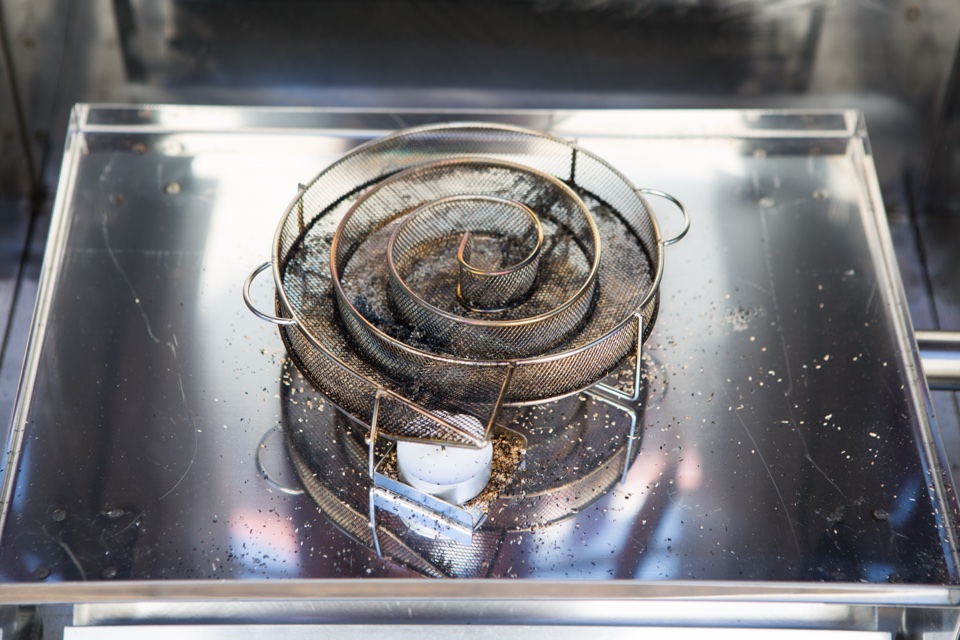
However, the type of wood is just one of four variables. Intensity class, grain size, moisture and the smoke generator are at least as important. Fine dust can smoulder ideally in a cold smoke generator, but compact and go out in a shaft generator. Coarse chips keep air channels open there, but are unsuitable for a fine cold smoke generator.
Last updated: 23 July 2026 · Author: Michael Vering, Beelonia GmbH · Reading time: approx. 12 minutes
Which smoking wood fits at a glance?
Mild wood accompanies delicate products, medium wood is universal, strong wood needs fat, mass or short dosing. This classification is a reliable starting point, not a flavour dogma. Spices, curing, smoking time and product fat mask fine wood differences; therefore, think in intensity classes first and develop personal mixtures afterwards.
| Wood | Intensity & aroma | Colour | Particularly suitable for | Caution |
|---|---|---|---|---|
| Beech | medium, balanced, slightly nutty | golden yellow to caramel | Fish, poultry, pork, sausage, cheese, also beef | dose carefully for very long smoking times |
| Alder | very mild, slightly sweet | golden brown to reddish | Salmon, trout, eel, poultry, mild cheese | usually too subtle for strong beef/venison |
| Cherry | mild to medium, fruity-sweet | golden brown to mahogany red | Pork, duck, poultry, fish, cheese; as a colour accent | sweetness can dominate if used alone for long runs |
| Juniper | strongly spicy, resinous, classic | accent instead of base colour | Venison, ham, sausage, trout – use sparingly in a mix | never as the sole smoking base |
| Apple | mild, sweet, floral | light gold | Fish, poultry, pork, cheese | often too delicate for dark meat |
| Oak | strong, earthy, tannic | dark brown | Beef, venison, lamb, hard cheese | use sparingly for fish and poultry |
Why is beech the safe universal wood?
Beech provides a clean, medium-strong smoke, reliable gold colouring and enough character without immediately overpowering delicate fish. This makes it the best reference wood: first stabilise a process with beech, then test alder, cherry or spice accents. Traditional German smoked goods also demonstrate its broad suitability.
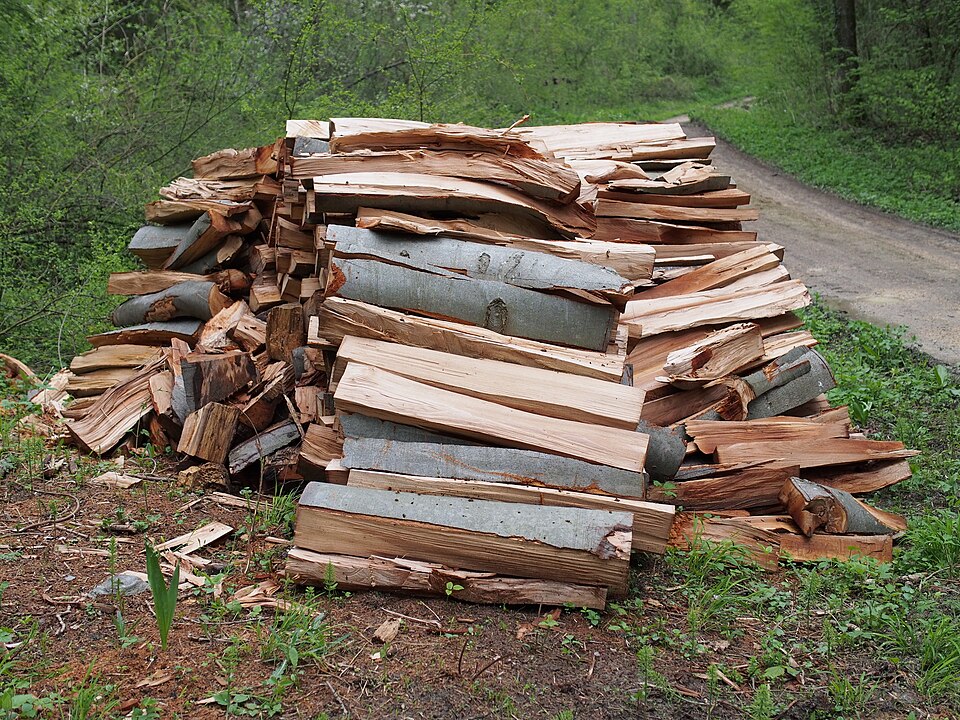
For trout, mackerel, sausage and pork, beech can be used on its own. For lighter results, it can be mixed with alder or apple; for a fruitier colour, with cherry. A practical test mixture is about 70% beech as a base plus 30% accent wood. This is a sensory starting formula, not a food technology requirement.
Beelonia stocks beech in various grain sizes: the fine RÄUCHERGOLD Buche HB 500–1000, 15 kg costs from €27.37. The 10-litre bag of Buche 750–2000 costs from €10.71. Prices as of 07/2026.
Reading tip: How much smoke each method needs is shown in the method guide; in the trout guide you can see beech in practical use.
When is alder the better choice for fish?
Alder smokes milder and slightly sweet; it allows the natural flavour of salmon, trout or eel to stand out more clearly than stronger woods. At the same time, it develops a warm, slightly reddish colour. This makes it particularly interesting for delicate or already intensely spiced fish products where additional smoke should not dominate.
Alder is not a 'pure fish wood': poultry, light ham and mild cheese also benefit. For large cuts of beef or dark venison, it often lacks depth on its own. In that case, it can provide a mild base, while beech or a little oak add structure. Beelonia wood chips Erle, 3 kg cost from €12.50 (as of 07/2026).
What does cherry change in the smoked goods?
Cherry adds a mild, fruity sweetness and colours more strongly than beech or alder – from golden brown to mahogany. It pairs well with pork, duck and poultry, but also works with fish. In our practical trout smoking, we deliberately use fine cherry dust for a fruity note and an attractive surface.
In the Beelonia video on smoked trout, fine cherry dust with a grain size of 500–1000 µm is used in the electric sawdust tray. Ignition takes about 15 minutes, after which the dust smoulders during the 85 °C process. This is a device- and product-specific practice – not proof that cherry must be fine in every smoke generator.
RÄUCHERGOLD Kirsche, 10 l costs from €18.45 (as of 07/2026). If you are mixing for the first time, start with 20–30% cherry to beech and only increase after tasting. Colour develops faster than a balanced aroma; 'darker' does not automatically mean 'better smoked'.
How is juniper used correctly?
Juniper is a spice accent, not a base wood. Berries or small, defined proportions in beech dust give ham, venison, sausage and fish a resinous, spicy peak. Too much juniper becomes medicinal, bitter and dominant. Therefore, it is better to use a ready-made mixture or dose in small, documented steps.
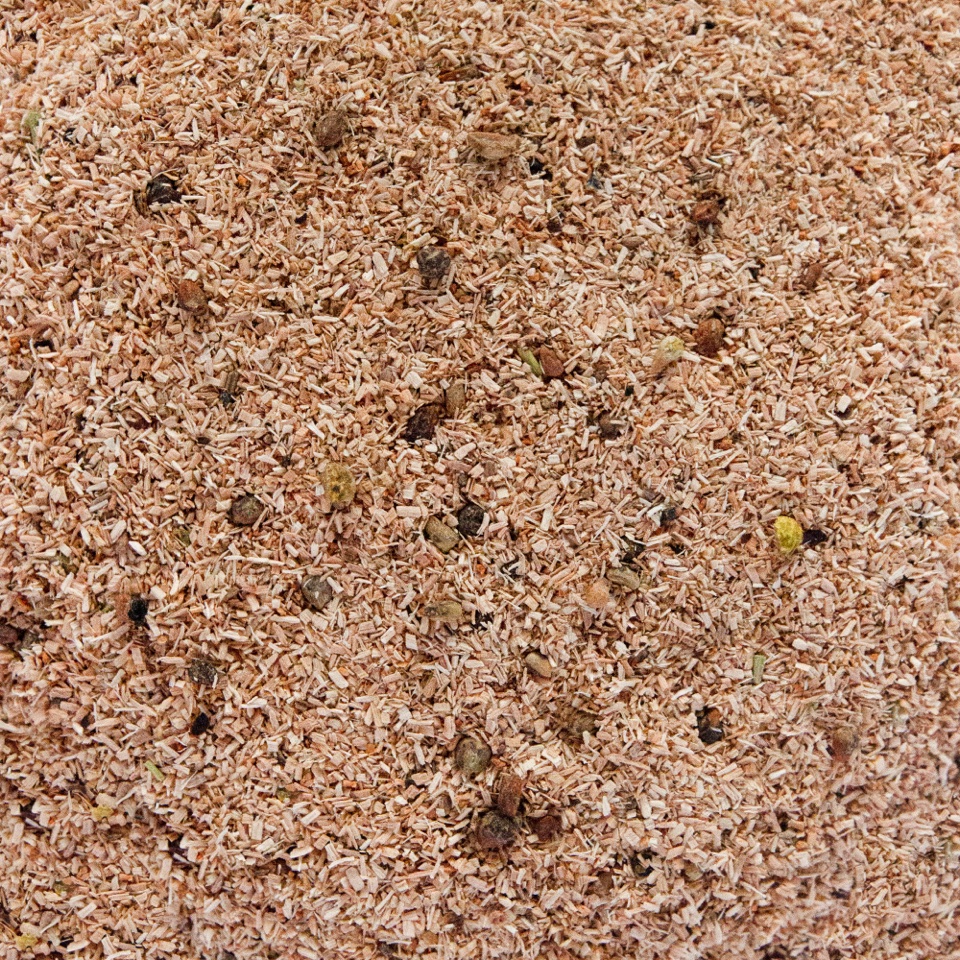
The Beelonia smoking dust 'Wachholderglück' combines beech and juniper and costs from €10.71. As an alternative spice direction, there is 'Mediterraner Zauber', also from €10.71 (as of 07/2026). In the hot-smoked salmon video, the Mediterranean mixture is spread flat in the dust tray.
Limit: Do not put unknown branches, needles or garden clippings into the smoker. Botanical mix-ups, pesticides and fluctuating resin contents make such experiments unnecessarily risky. For reproducible results, only use declared smoking products and food-safe spice additives.
Which woods and materials are taboo?
For general smoking practice: only resin-free hardwoods, without bark, dry and natural. Softwood, treated construction or furniture wood, pallets, mouldy wood and unknown species never belong in smoke generation. Resin and bark promote soot, tar, bitterness and unwanted combustion products.
| Taboo material | Why it does not belong in the smoke |
|---|---|
| Spruce, pine, fir, larch | high resin content; acrid smoke, soot and tar |
| Bark, especially birch bark | oils, contamination and uneven combustion |
| varnished, glazed, impregnated wood | possible dioxins, furans, heavy metals and other pollutants |
| Pallets, construction wood, furniture remnants | origin and chemical treatment not reliably known |
| mouldy, rotten or decaying wood | spores, off-odours and decomposition products |
| Heating pellets | not necessarily food-safe; often softwood or unsuitable additives |
| unknown garden woods | species, toxicity and sprays not reliably clarified |
Black Forest ham is a documented traditional exception with fir and spruce smoke under a specific protected manufacturing process. This special tradition is not a clearance for softwood in a hobby smoker. Without the defined raw material and process, softwood remains taboo.
Which grain size does which smoke generator need?
The correct grain size depends first on the device, not on the type of wood. Fine material reliably transfers the embers in narrow cold smoke generator channels. In high shaft generators, the same dust can compact and choke the airflow; there, coarser wood chips or chips keep cavities open for a stable burn.
| Material / grain size | Typical use | Strength | Common mistake |
|---|---|---|---|
| HB 500–1000, approx. 0.5–1.0 mm | Cold smoke generator, fine dust tray, cold smoke | even ember chain, little inherent heat | damp or too loose: goes out |
| 750–2000, type designation approx. 0.75–2.0 mm | Dust trays and approved generators | slightly airier, versatile | filling blindly into any cold smoke generator or shaft |
| coarse chips/wood chips | Shaft smoke generators, automatic machines | good air channels, continuous follow-up | jamming due to unsuitable geometry |
| Chips, approx. 4–12 mm | Smoker box, grill, certain generators | quickly dosable smoke | soaking or overdosing |
| Chunks/logs | Charcoal and offset smokers | long smoke and heat emission | unsuitable for dust trays and cold smoke generators |
In the Beelonia smoke generator video, the shaft is filled to about three quarters with coarse material. Fine dust would compact there and choke itself. In contrast, the trout practice in the electric smoker explicitly requires fine dust. The apparent contradiction is completely resolved by the design of the smoke generator.
How dry must smoking dust be?
Smoking dust must be dry, mould-free and free of off-odours; water does not belong in it as a smoke regulator. Professionally dried goods often have a residual moisture of around 8–13%, air-dried smoking wood more like 15–20%. The decisive factor is a stable smouldering process without steam, condensation and dense white continuous smoke.
Soaking chips is a common but bad routine: measurement tests show only slight water absorption; initially, steam is produced instead of clean smoke. With smoking dust, moisture exacerbates compaction and smouldering interruptions. Studies by the Max Rubner Institute also show that higher wood moisture can go hand in hand with rising PAH4 values.
Store dust and chips in a clean, dry, tightly closing container. Lumps, a musty smell or visible mould are exclusion criteria. Freshly cut wood with approximately 50% water is not smoking wood; logs must dry properly and be measured on the inside.
How do you recognise good smoke?
Good smoke is thin, even and aromatic – not permanently thick and white. When lighting, light steam is normal; it must subside. If the smoke remains dense, the material, moisture, temperature or air supply are wrong. Keep the exhaust air open, use dry hardwood and prefer to run less smoke over a longer period.
The often-cited 'thin blue smoke' comes mainly from hot BBQ combustion. With cold smoke, the material smoulders without an open flame; there, the smoke can appear thin and white. The decisive factors are smell, even draught and the absence of soot or pungent creosote – not chasing a specific visible colour.
Which Beelonia products fit together?
First choose the smoke generator and grain size, then the wood and spice mixture. If you operate a cold smoke generator, start with HB 500–1000. Coarse material is chosen for the insulated Beelonia shaft generator. Smoker size and wood type do not change this principle; the manufacturer's approval for the specific device must apply to every combination.
| Requirement | Suitable choice | Price, as of 07/2026 |
|---|---|---|
| fine standard dust | Buche HB 500–1000, 15 kg | from €27.37 |
| medium-fine beech | Buche 750–2000, 10 l | from €10.71 |
| mild fish smoke | Wood chips Erle | from €12.50 |
| fruity accent | Kirsche, 10 l | from €18.45 |
| spiced mixtures | Wachholderglück / Mediterraner Zauber | from €10.71 each |
| external generator Smoky/F1–F2 | Smoke generator | from €497.42 |
| professional generator F4–F6-100 | Smoke generator F4–F6-100 | from €1,001.98 |
When is smoking dust not the right choice?
Dust does not automatically fit into every smoker. An offset smoker runs on dry hardwood logs, a charcoal grill usually better with chunks, a smoker box with chips and a shaft generator with coarse wood chips. If you choose the material form against the device geometry, you will struggle with extinguishing, flare-ups, smoke peaks or blocked follow-up.
- no fine dust in a generator whose instructions require coarse chips;
- no chunks or coarse chips in the cold smoke generator;
- no juniper as the sole fuel filling;
- no strong oak or hickory as the first choice for delicate fish;
- no wet material to artificially increase the amount of smoke;
- no unknown custom mixture for a large or commercial batch.
Which mistakes happen most frequently with smoking dust?
Most mistakes are not the wrong type of wood, but incorrect application. Too much material, moisture, closed exhaust air and a lack of drying on the food will make even high-quality beech dust bitter. A documented small test batch is more valuable than a complicated mixture without a reference.
| Problem | Probable cause | Solution |
|---|---|---|
| Cold smoke generator goes out | Dust damp, too coarse or airway blocked | moderately compact dry 500–1000 dust, keep gaps clear |
| Shaft generator stops | Material too fine or clumped | coarse approved chips, dry storage, check shaft |
| Goods become bitter | smoke too dense, exhaust air closed, strong wood overdosed | increase draught, reduce smoke amount, milden with beech/alder |
| Surface remains pale | Smoked goods damp or smoking cycle too short | let pellicle form, extend process instead of smoke cloud |
| black spots | Bark, fat fire, soot or condensation | bark-free wood, catch fat, dry and clean smoker |
| Aroma not reproducible | Mixtures and batches not noted | document wood, proportion, amount, time, weather and result |
What does the fish smoking book explain about wood choice?
The fish smoking book by Michael Wickert connects wood type, fish, device and process, instead of providing isolated aroma tables. In the Beelonia video, Michael Vering presents, among other things, the chapters on smoking woods, bark removal, double-walled smokers and typical mistakes. Especially for fish, this overall view is more helpful than a long list of exotic woods.
The fish smoking book is suitable if you do not just want to choose an aroma, but want to understand brine, drying, wood and temperature as a coherent process.
Which questions are asked particularly frequently?
Which smoking dust is best for beginners?
Beech in a grain size suitable for the device is the best reference. It is medium-strong, versatile and more forgiving with fish, meat, sausage and cheese than very strong or heavily spiced woods. For a cold smoke generator, 500–1000 is usually suitable; a shaft generator may explicitly require coarser chips.
Which wood is best suited for fish?
Alder is particularly mild and classic for salmon, trout and eel. Beech provides more spice and a reliable gold colour; cherry adds fruitiness and a darker colour. Start with alder or beech and use cherry as a proportion. Use strong oak or hickory only very sparingly.
Can you moisten smoking dust?
No, for a stable, clean smouldering process, smoking dust should remain dry. Moisture promotes lumps, steam, condensation and smouldering interruptions; scientific data also links higher wood moisture with rising PAH4 values. If material does not smoulder, check grain size, compaction and air supply – do not add water.
What does 500–1000 mean for smoking dust?
The number indicates the grain size in micrometres: 500–1000 µm corresponds to approximately 0.5–1.0 mm. This fine fraction reliably transfers the embers in many cold smoke generators. However, the key figure is not a universal device approval; dust tray, shaft generator and automatic machine may each require a different grain size.
Can you mix beech and cherry?
Yes. A sensible test mixture is about 70% beech and 30% cherry. Beech forms the balanced base, cherry brings fruitiness and mahogany colour. Start with a small batch, document the proportion and smoking time, and change only one variable on the next attempt.
What is the simplest decision rule?
Take beech as a reference, alder for particularly mild fish smoke, cherry for fruitiness and colour, and juniper only as a spice accent. After that, you must check the material form: fine dry dust for a cold smoke generator or approved dust tray, coarser chips for the shaft generator. This way, aroma and technology fit together.
The right dust is ready
Beelonia GmbH has been manufacturing smoking technology in Beelen since 1880 – and will advise you personally on model, heating type and accessories.
Sources and technical basis: JRS RÄUCHERGOLD and Toprauch on grain sizes and quality criteria; Holsteiner Katenschinken PGI on the beech wood tradition; Schutzverband Schwarzwälder Schinken on the strictly limited softwood exception; Federal Environment Agency on treated wood; CVUA Karlsruhe and EU maximum levels for PAHs; Max Rubner Institute/Hitzel et al. on the influence of smouldering temperature and wood moisture; AmazingRibs/Prof. Greg Blonder on smoke phases and the soaking myth; Beelonia videos 'The smoke generator', 'Smoked trout', 'Smoking hot-smoked salmon' and 'The fish smoking book'. Aroma assignments were consolidated from several DACH and international practical sources and deliberately formulated as guidance rather than a law of nature.


