



Gas smoker comparison: Wood, gas or electric?

A gas smoker combines an easily adjustable heat supply with operation without a wood fire. If you are looking for a 'gas smoker', you should still compare more than just the energy source: the desired temperature control, location, available connections, and workload are crucial. Wood requires active fire management and suits an artisanal process. Gas can be regulated directly, while an electric smoker needs a suitable power connection and works without fuel storage. For cold, warm, and hot smoking, you also need to check which methods the respective model and heating system support. With the Beelonia F series, your decision remains flexible: heaters for wood, gas, or electricity are interchangeable and retrofittable. The following wood-gas-electric comparison categorises the three variants by control, effort, and area of application.
Product tip: With the Beelonia F2 with gas heating, you can choose gas as your heating system. In the F series, the heating is interchangeable and retrofittable, so you can also use electricity or wood.
The best choice depends on your working style, the location, and the desired repeatability. If you want to manage a fire, you will be happy with wood. If you want to heat up quickly and stay mobile, check out gas. If you prefer to monitor the temperature instead of a flame, go for electric. With the Beelonia Smoky and F series, you can generally change the heating, so your first decision doesn't have to be final.
Last updated: 23 July 2026 · Author: Michael Vering, Beelonia GmbH · Product prices: as of 07/2026
How do wood, gas, and electricity differ at a glance?
Wood maximises artisanal influence, gas combines performance with mobility, and electricity prioritises control comfort. When it comes to aroma, the ranking is less clear-cut: a clean smoking dust ember can also deliver strong smoke with gas and electricity. Poor combustion, on the other hand, creates bitter, sooty smoke even with a wood fire.
| Criterion | Wood | Gas | Electric |
|---|---|---|---|
| Temperature control | manual via fire and air | direct via burner, easily adjustable after getting used to it | most precise with a thermostat |
| Heating up | preparation and ember building required | fast | even, depending on the model |
| Infrastructure | dry, suitable wood | propane gas bottle, hose, pressure regulator | suitable power connection |
| Operating effort | high | medium | low |
| Weather sensitivity | wind affects draught and burn | flame and fine adjustment sensitive to wind | no flameout; heat loss remains |
| Smoke source | fire/embers and possibly smoking dust | separate smoking dust tray | separate or integrated smoking dust ignition |
| Typical fit | active process management | flexible outdoor operation | reproducible batches |
Why do you have to separate the heat source and the smoke source?
The heating brings the food to temperature; the smoke source provides the aromatic wood components. With wood, both functions can closely coincide. With gas and electricity, the burner or heating element warms the cabinet, while smoking dust smoulders in a tray or is ignited by its own coil.
This separation explains two common misunderstandings. Firstly, an electric smoker is not 'smoke-free': it can certainly produce beech, alder, or other wood smoke. Secondly, a wood fire does not guarantee a better result. Smoke from damp wood, lack of oxygen, or fat in the embers creates bitterness and soot. The goal is thin, clean smoke in the right amount.
With long BBQ cooking times, a real fire can produce additional combustion gases and a more pronounced smoke ring. Measurements from BBQ research show differences compared to electric here. However, the smoke ring is primarily a visual reaction and not a reliable quality feature. With typical fish smoking times, the practical difference in taste can be significantly smaller.
Reading tip: Which model fits the heating drawer is explained in the buying guide; how you can change the heating type later without buying a new one is shown by the Beelonia interchangeable system; in the end, the wood creates the aroma – read more in the smoking dust guide.
Who is wood in the smoker the best choice for?
Wood suits people who want to consciously control fire building, draught, and temperature, and who have time during the process. It works without electricity or a gas bottle and directly combines heat and smoke generation. In return, performance and burn fluctuate more with wood quantity, moisture, log size, wind, and air dampers.
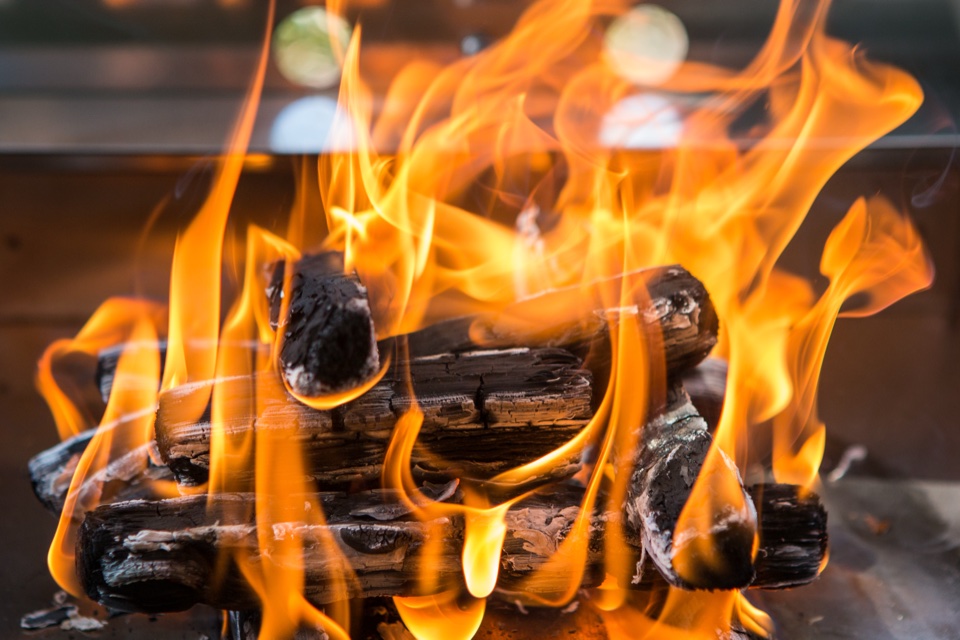
Clean wood operation starts with dry, untreated hardwood. Resinous softwood, varnished scraps, and unknown construction wood do not belong in the food process. To heat up, a controlled fire is built; after that, the fuel quantity, supply air, and exhaust regulate the temperature. Frequent, frantic refuelling creates fluctuations rather than control.
What specific advantages does wood offer?
Wood is independent of electricity, tangible and intuitive, and offers the greatest direct intervention in fire and smoke. Experienced users can influence heat and smoke character very finely. Fuel is often readily available regionally. However, this strength only becomes an advantage if the operator masters clean combustion and air flow.
- no socket and no gas fitting required
- direct control over embers, flame, and draught
- additional combustion aromas for suitable applications
- heating drawer in Smoky and F as robust basic equipment
What are the limits of wood?
Wood requires presence and experience; particularly low or exactly repeatable temperatures are more difficult. Wind changes the draught, fuel batches behave differently, and too little oxygen makes the smoke dirty. For tightly scheduled production or operators without time, this learning curve is a real disadvantage.
When cold smoking, you don't work with the normal heating fire. Instead, fine smoking dust smoulders in a cold smoke generator and produces as little of its own heat as possible. So, if you choose 'wood', you don't automatically opt for an open fire for cold smoke, but often for a small, controlled trail of embers.
Who is gas in the smoker the best choice for?
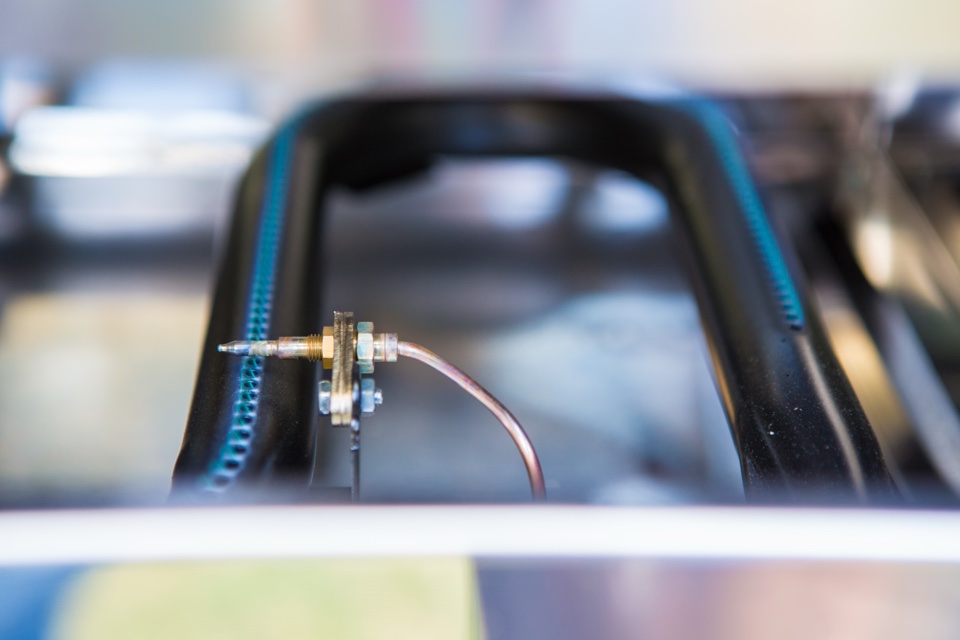
Gas suits users who want to heat up quickly, work without a socket, and change the output directly at the burner. A propane gas bottle makes the smoker flexible outdoors. After a short familiarisation period, the temperature can be controlled well; wind and very low power levels remain the typical challenges.
In the Smoky video, the gas drawer is shown with a hose and pressure regulator; it is designed for standard propane gas bottles. With the F2/F2-70, Michael Vering demonstrates the tool-free change to the larger gas drawer. The performance values differ by series: the video mentions 4 kW for Smoky and 8 kW for the shown F module. More power is not automatically better – it must match the cooking chamber and target temperature.
What specific advantages does gas offer?
Gas reaches the target temperature quickly, reacts immediately to regulator movements, and remains independent of the power grid. This is practical at events, in the garden, or at changing locations. The smoke intensity can be controlled via the separate smoking dust tray without having to manage a wood fire in the cooking chamber.
- fast heating up and immediate switch-off
- mobile energy source with a propane gas bottle
- less fire maintenance than with wood
- separate dosing of heat and smoking dust
What are the limits of gas?
Gas needs a safe fitting, sufficient ventilation, and wind protection without a dangerous enclosure. In warm weather, a powerful burner can deliver too much heat in the lower control range. Combustion also produces water vapour. The bottle, hose, and pressure regulator must be suitable, undamaged, and operated according to the manufacturer's specifications.
When heating up the system shown in the F video, the smoking dust tray is initially not pushed over the burner. Only when the cooking temperature is reached is the filled tray added. This is a specific operating recommendation for this setup, not a universal rule for every gas smoker.
Who is electric in the smoker the best choice for?
Electric suits beginners and frequent users who want reproducible temperatures with little readjustment. With a suitable thermostat, the heating switches according to the target value and separates cooking chamber heat from smoke production. A suitable socket is mandatory; mobile use without reliable power and users with a focus on fire are less suitable.
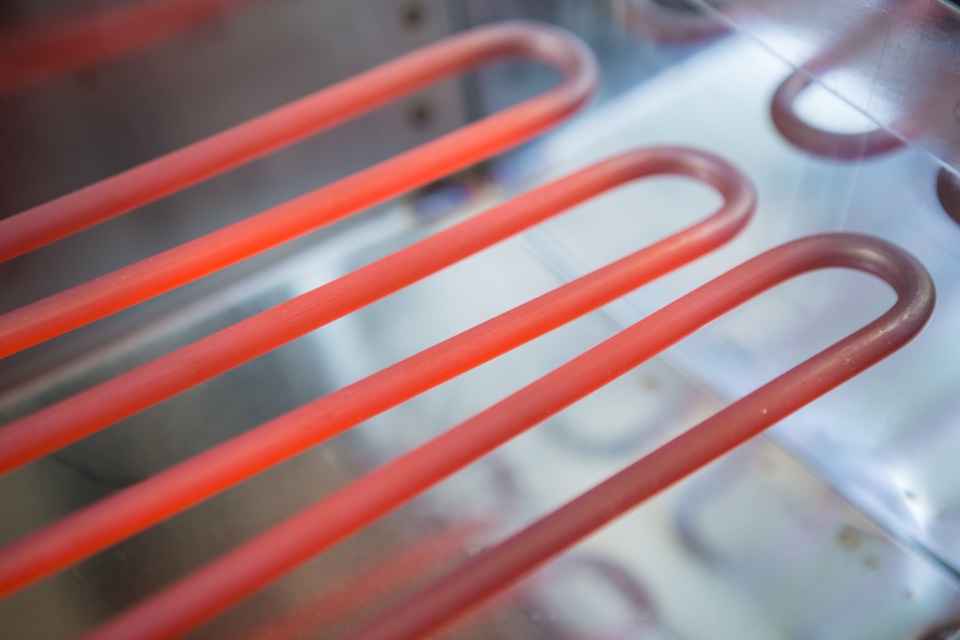
In the electric F version, a digital control regulates the chamber temperature. A separate ignition coil makes the smoking dust smoulder. The older presentation video still shows a mechanical ignition timer and an airflow running during the smoke phase. The later update for the F2-70/60 and XL, on the other hand, uses buttons, time relays, and a central ignition coil. According to the update video, the following explicitly applies to updated devices: fan only for drying, switch off before igniting the smoke.
What specific advantages does electric offer?
Electric keeps the target value the steadiest, avoids open burner flames, and allows a clear separation of heating, drying, and smoke ignition. This makes recurring recipes easier and reduces the necessary supervision, as far as the operating instructions and food process allow. Nevertheless, smoking equipment should not be operated completely unattended.
- automatic temperature control with a suitable thermostat
- no refuelling and no bottle changing
- separate ignition of the smoking dust possible
- drying and cold smoke functions on electric F models, depending on equipment
What are the limits of electric?
Electric depends on the mains connection and functioning control technology; the heat source itself does not provide any fire aromas. Smoke must be generated via smoking dust. With long meat jobs, the profile can seem milder than with real wood combustion. Repair and replacement must match the specific control and heating generation.
The statement 'electric always tastes weaker' is nevertheless too broad. With trout, cheese, and other shorter applications, many practitioners value the gain in control higher than the difference in the main heating. Clean drying, the right type of wood, smoke duration, and temperature errors often shape the result more strongly.
Which Beelonia smokers allow you to change the heating type?
The mentioned Smoky and F models are generally designed for interchangeable wood, gas, and electric heating. The decisive factor is the right module for the series and size. If you buy with wood today, you can retrofit later; however, a Smoky heating block and an F heating unit are not universal identical parts.
| Series | Suitable models | Matching heating options |
|---|---|---|
| Smoky | Smoky 4, 5, 6 | Wood drawer; Gas heating block for Smokys; Electric heating block for Smokys |
| F compact | F1, F2 and suitable variants | Wood drawer; Gas burner F1/F2-70XL 8 kW; Electric heating F1 and F2 |
| F electric control | compatible F1/F2 version | Thermostat Beelonia F1/F2 electric, check compatibility before ordering |
For beginners, the smokers start with the Smoky 4 from 540.26 €, Smoky 5 from 630.70 €, and Smoky 6 from 706.86 €. If you want double walls, you start with the F1 from 1,035.30 € or F2 from 1,401.82 €. Gross 'from' prices, as of 07/2026.
How do I convert a Smoky to gas or electric?
With the Smoky, the lower wood drawer is removed and replaced by the matching gas or electric drawer with a smoking dust tray. The product video shows the process as a simple sliding system. Before buying, you should check model compatibility, available power supply or gas bottle, and a safe location.
The electric heating block for Smokys is interesting for users who want more control comfort after starting with wood. The gas heating block for Smokys maintains independence from the socket. We deliberately do not mention accessory prices here because there are no validated current values for them.
How does the electric F series work in the video?
The electric F heating regulates cooking chamber heat and smoke ignition separately. In the presentation video, Michael Vering introduces the target temperature, ignition coil, sawdust tray, and air flow. The subsequent update changes parts of the operation; therefore, the instructions for the actually delivered device generation should always take precedence over the older video.
What was updated on the F2-70/60 electric?
The update shows buttons with time relays, new full stainless steel heating coils, and central smoke ignition. For cold smoke, an M-shaped insert is placed in the dust tray. The claimed longer lifespan of the new alloy is a manufacturer's specification without published operating hour tests. The details shown only apply to these updated electric variants.
Which heating type suits which usage scenario?
The decision can usually be made faster based on infrastructure and desired attention than on aroma. Without a socket, electric is out; without safe gas operation, gas is out. If you want to manage a fire throughout the entire process, choose wood. If you document repeatable batches, you will benefit most from electric control.
| Scenario | First choice | Alternative | Reason |
|---|---|---|---|
| Beginners, predictable results | Electric | Gas | less readjustment |
| Fishing spot or location without power | Gas | Wood | mobile energy source |
| Smoking as an active craft | Wood | Gas | direct influence on fire |
| frequently the same recipes | Electric | Gas | reproducible target temperature |
| Cold smoking | Cold smoke generator/separate smoke ignition | integrated electric F system | as little additional heat as possible |
| changing uses | Smoker with interchangeable drawer | – | heating type adaptable later |
When does none of the three Beelonia heating solutions fit?
If you are looking for fully automatic pellet feeding, app control, or classic offset BBQ, you are comparing a different device category. Even with just two fish a year, a table smoker can be more economical. Without a safe outdoor location or a compliant exhaust, it's not the heating type but the entire smoking cabinet that is a no-fit.
No heating compensates for an overcrowded cooking chamber, damp goods, or the wrong smoke. And no variant may be operated in an unventilated garage: gas fires and smouldering smoking dust produce dangerous exhaust gases. For chimney connections, commercial use, and fixed installation, local regulations also apply.
Which questions about wood, gas, and electric are frequently asked?
The most frequently asked questions revolve around getting started, aroma, retrofitting, cold smoking, and operating costs. The answers separate reliable principles from blanket promises. For safety, compatibility, and operation, the instructions for the specific heating module and the actually delivered device generation always apply; they should be carefully checked before every use.
Which heating type is best for smoking beginners?
Electric with suitable temperature control has the flattest learning curve because the cooking chamber heat can be maintained automatically. Gas is also easy to control but requires a feel for the low power range. Wood suits beginners who consciously want to learn fire management and stay by the smoker during the process.
Does smoked food from the electric smoker taste less smoky?
Not necessarily. In the electric smoker, smoking dust generates the smoke, while the heating coil primarily provides heat. With fish, the difference to fire heating can be small. With long meat cooking times, however, combustion gases from the main fire are missing; smoke quantity, wood type, and clean embers remain crucial. A clean process is more important than the label of the heating.
Can I retrofit my Beelonia smoker later?
With the mentioned Smoky and F models, the heating is generally interchangeable. Always use the module that matches the series and size: electric or gas heating block for Smoky, and electric heating or gas burner for the suitable F models. Control, power, and insertion dimensions are not arbitrarily interchangeable.
Can you cold smoke with gas or electric?
Yes, but when cold smoking, a cold smoke generator or a separate smoke system usually produces the cool smoke; the main heating stays off or only regulates when needed. The electric F version can generate smoke internally separately. The key is to conservatively keep the chamber below 25 °C.
Is gas cheaper than electric or wood?
A blanket ranking would be dubious: energy prices, outside temperature, smoker size, insulation, heating-up time, and batch duration change the costs. Therefore, compare the consumption of a specific model with your local tariffs. With infrequent use, the purchase of the heating module often outweighs the energy price per smoking session.
Change the heating drawer instead of buying new?
Beelonia GmbH has been manufacturing smoking equipment in Beelen since 1880 – and will advise you personally on models, heating types, and accessories.
Sources: Beelonia product data and gross prices, as of 23/07/2026; Beelonia videos 'Vorstellung Räucherofen F-Serie Elektro', 'Was ist neu am F2 70/60 & F2 70/60 XL?', 'Vorstellung Beelonia Räucherofen Smoky 5 & 6', and 'Vorstellung Beelonia Räucherofen FII + FII70'; supplementary device and combustion research at feinkosten.de, raeucherprofi.net, Räucherwiki, and AmazingRibs, among others. Manufacturer heuristics and generation-specific operating instructions are explicitly limited; old video prices were not used.


